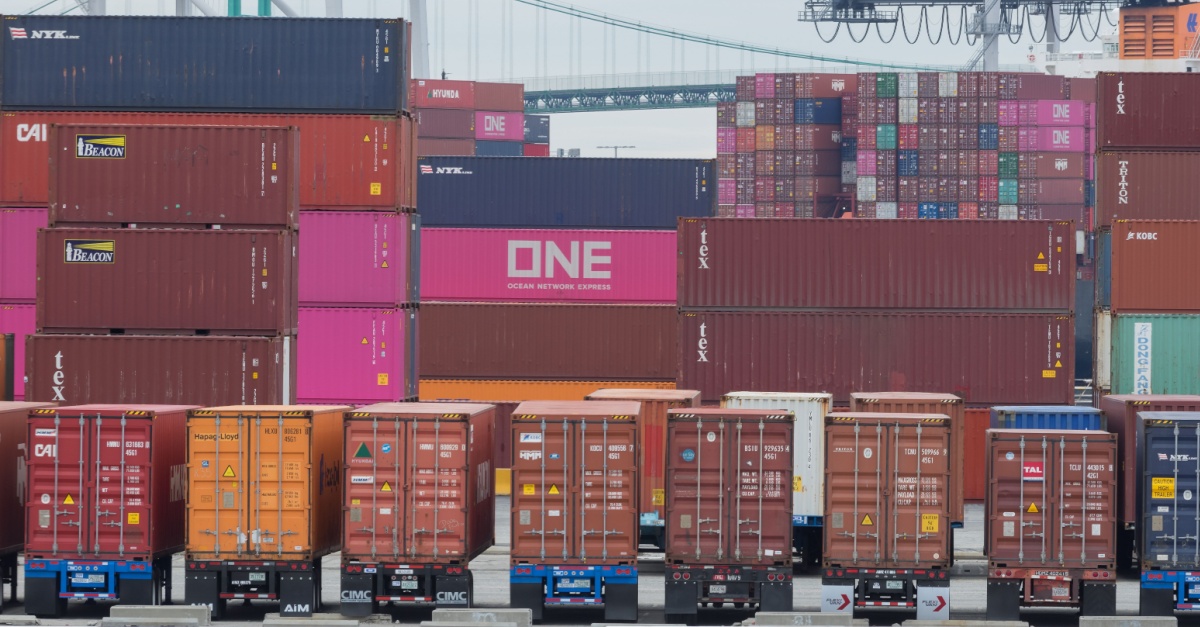
Congestion at busy ports like Los Angeles and Long Beach isn’t just an inconvenience — it drives up storage costs, clogs supply chains, and slows down distribution. Smart transloading offers a way out: shifting cargo quickly and strategically between transport modes to cut inland miles, avoid detention charges, and move freight to market faster.
However, if it is done wrong, there will be added waste to every load. This is why transloading is not just a nice add-on to the freight or inland transportation process but a critical control point that can have ripple effects across entire supply chain operations.
Transloading is the process of moving goods from one mode of transport to another. In a hot spot like Southern California, that often means taking imports from containers and repacking them into trailers or smaller units for inland delivery. Cargo transfer here plays a central role because most U.S. imports flow through LA and Long Beach. Without an efficient cargo transfer process, shippers are prone to encountering bottlenecks that result in increased detention and demurrage.
The Port of LA handles approximately 40% of all containerized imports into the country. Couple that with Long Beach, and you will see that Southern California handles nearly 50% of all ports coming into the country. The sheer scale of that force means that shippers operating out of this region need to think beyond the vessel. Transloading connects ports to inland transportation solutions, providing shippers with the operational flexibility and efficiency they need.
A container may arrive at Long Beach, be stripped at a near-dock facility, and then be combined with other loads before being sent to a distribution center in Austin, Texas. By planning and reshaping cargo early, shippers can avoid moving air in half-full trailers and establish a direct link between global supply and regional distribution.
When transloading in Los Angeles and Long Beach is poorly managed, costs will rise rapidly. This is because containers remain at terminals for too long, resulting in demurrage charges that can reach hundreds of dollars per day. On the other hand, trucks arrive only to find that the freight is not ready, resulting in detention fees.
Even if the trucks are ready in both scenarios and the trailer is only half full, it incurs another cost because half-empty containers result in higher per-unit costs on inland hauls.
Take, for example, an apparel shipper. If trucks carrying the apparel were not consolidated before leaving the port, the shipper may see trucking costs climb by 20%. The same apparel shipper may face thousands of dollars in storage charges simply because cargo transfer operations lag behind port releases. Numbers like these show why treating transloading as a side task is risky.
Cost-efficient transloading is possible, but only when the right strategies are leveraged. Some of these strategies include:
The first step in cost-efficient transloading is to use every inch of the trailer space, no matter its size. This is why repacking is crucial during cargo transfer. It allows for multiple small shipments to be combined into fewer truckloads, which means that instead of sending three half-full containers inland, shippers can consolidate into two full loads.
That single move can cut drayage trips, save on fuel, and lower the labor costs at destination warehouses. Load consolidation also reduces congestion at inland distribution centers. This means that rather than processing extra trucks and empty boxes, staff can handle fewer, fuller loads, which creates smoother operations across warehouse transfer logistics.
Every hour a container waits at the terminal, it incurs additional costs. However, in Southern California, shippers can utilize near-dock facilities to transload freight, as this shortens the gap between vessel discharge and inland movement. By aligning drayage appointments with transloading schedules, it is possible to cut dwell time significantly.
For example, a shipper that deploys this strategy and is able to reduce up to 24 hours in dwell time at the LA and Long Beach ports can save up to $200 to $300 per container in avoided fees. Multiply that across hundreds of containers, and the savings will be substantial. Smooth port-to-warehouse delivery also speeds up product availability, enabling shippers to achieve faster inventory turns.
Modern transloading operations must run on real-time data. By leveraging platforms or applications that link port terminals, drayage providers, and warehouses, shippers have the necessary visibility into container status required to ensure a seamless process. For example, with live updates, dispatchers can reroute trucks, adjust staffing levels, and prevent missed appointments.
Visibility is not a luxury — far from it. It is a requirement that shippers need to navigate the increasingly complex freight system, namely managing port congestion. Live tracking during cargo transfer helps avoid wasted miles and unnecessary demurrage or detention charges. Shippers that adopted real-time tracking tools reported up to a 15% reduction in missed drayage appointments, resulting in both time and cost savings.
Southern California experiences predictable surges — Q4 retail imports, spring produce, and summer back-to-school sales. Without planning, shippers will often find themselves scrambling for trucks and warehouse space. Meanwhile, by simply booking transloading hubs early, shippers can secure capacity at stable rates.
Pre-staging goods near customers through short-haul trucking also helps spread demand and reduce inland miles. For instance, by prebooking transloading space a month before the holiday season starts, one can avoid the steep surcharges that typically hit late movers and come with demand surges during that period. This planning ensures cargo transfer is steady, predictable, and far less costly.
One of the most effective ways to reduce costs is to work with a provider that manages transloading, drayage, and inland freight under one roof within Southern California. Integration reduces handoffs, errors, and communication gaps. Instead of juggling three vendors, shippers have a single partner responsible for the entire process. Golden State Logistics is great at this.
For example, if an electronics importer reported a 15% lower per-container cost after switching to an integrated logistics provider, those gains are typically realized through faster turns, fewer missed appointments, and more efficient use of chassis and drivers. Integration also provides shippers with flexibility during surges, as the provider can shift resources between drayage and warehouse transfer.
Transloading is not just about moving cargo from one box to another. In major markets like Southern California, it is a strategy that defines cost control. Shippers that optimize container use, reduce dwell time, track shipments in real time, plan for peak periods, and collaborate with integrated providers transform cargo transfer into a source of savings.
By rethinking transloading as a value driver, not a side step, shippers build networks that are leaner, faster, and more reliable. The message is simple: Smart transloading turns every box into savings.
Golden State Logistics has built transloading services in Southern California around control and cost savings. By combining transloading, inland trucking, and drayage in Southern California, GSL gives shippers a single partner to manage cargo transfer from port to warehouse. Near-dock facilities at LA and Long Beach cut dwell time, while inland hubs handle freight consolidation for faster regional delivery. During peak season, GSL adds capacity early to shield shippers from surcharges.
Contact us today to elevate your logistics operations.

Technology is not a new concept or phenomenon, and neither is the transloading operation. This means the transloading operations have witnessed their fair share of technology solutions.

Companies like Golden State Logistics are taking drayage operations to the next level, using technological innovation to improve drayage operations significantly and reduce shippers' environmental footprint.
2999 East Pacific Commerce Drive Rancho Dominguez, California 90221
Oakland, CA


