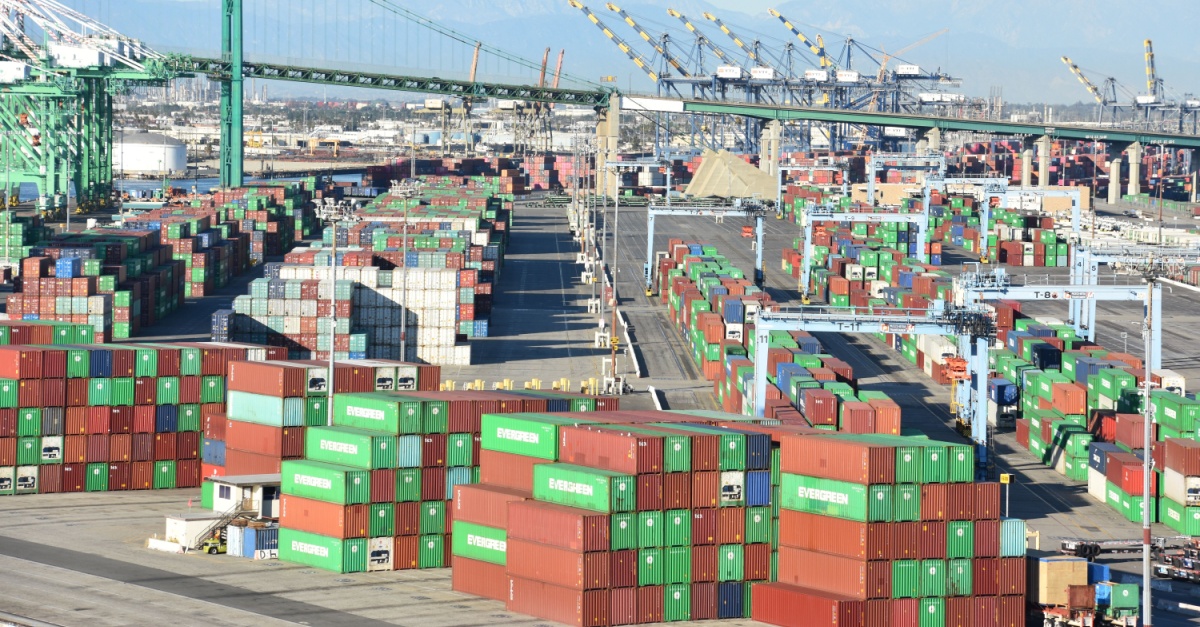
Resilience in inland transport is not about working harder through peak chaos. It is about moving smarter before it overwhelms operations. Shippers often think that chaos is just a part of the Southern California inland transport and freight cycle. And they have a point for the most part. But what if the real issue isn’t the system but how we prepare for it?
In this article, we’ll break down six strategies that help build real resilience during SoCal’s busiest times.
Seasonal shifts in Southern California inland transport aren’t subtle. The region’s dominance in containerized freight means even slight fluctuations can have massive ripple effects across the entire freight ecosystem.
When these issues occur, shippers risk losing control of delivery timelines, experiencing rate spikes and struggling to maintain service levels. Avoiding that spiral requires preparation, not reaction. Here are proven strategies you can leverage:
Instead of waiting to book trucks when freight arrives, take action earlier and work with providers to set seasonal commitments weeks or months in advance. Even partial forecasts give you more leverage than last-minute bidding. Focus on local carriers with deep networks across the Long Beach and Los Angeles inland transport corridors. For example, if a consumer electronics importer locks in truck appointments for November by July, when port congestion peaks, its containers are more likely to be cleared while the competitors’ sit idle.
Containers should never be at the port longer than necessary. You have to move them quickly. To do that, schedule containers to go straight from the port to the transloading hubs. This way you can shorten dwell time, free up chassis, and have more control over the routing process. A good way to do this is to bundle drayage and transloading with one provider to avoid scheduling gaps. If you don’t need to store, use cross-docking. This way the goods go from container to outbound trailer without long stops, which reduces handling time and fees.
Take, for example, an apparel distributor that splits final-mile deliveries between intermodal and regional truckload. When a lane shuts down due to wildfires, it can reroute 60% of the volume within record time. Rigid shipping plans break under pressure, but staying flexible will help you operate more seamlessly. Create backup routing plans and have alternates ready when the usual lanes choke. Add short-haul trucking or intermodal legs when a full truckload isn’t available. Consider staging goods in multiple warehouse locations so you can shift operations without delay.
During peak season, information becomes outdated quickly, making real-time tracking critical to stay ahead. To stay ahead, utilize freight dashboards or port authority feeds to monitor congestion, dwell times, and driver availability. Talk with dispatchers every morning. If the 710 or 60 freeways start backing up, shift delivery appointments or warehouse intake windows immediately.
Flexibility is great, but that doesn’t mean gambling on the spot market. It is important to add layers. Keep a bench of surge-ready providers with short-term rates. These backup carriers don’t replace your main partner, but they give breathing room when demand spikes. Build rules into contracts for how and when to activate overflow support. However, relying solely on the spot market during the holidays can result in costs that are double or triple the standard rates. Prep surge plans well in advance.
The difference between stuck and smooth often comes down to how well someone understands the ports of LA and Long Beach, regional traffic rhythms, and real-time carrier behavior. Generic providers miss local details that matter. But prioritizing experience ensures you get the best out of them. Partner with operators like Golden State Logistics that specialize in the Southern California freight environment.
Golden State Logistics doesn’t just move freight. Our team specializes in providing end-to-end inland freight support that bends with the season but doesn’t break. From real-time dispatch at the LA and Long Beach ports to fast-turn transloading and flexible inland coverage, our teams build systems around your freight — not the other way around. We help shippers ship smarter by staying ready before the pressure starts. Connect with us today to see the difference.

Companies involved in international trade quickly discover the value that transloading offers because the process streamlines the movement of goods across diverse transportation modes.

How cloud systems improve collaboration, centralize documentation, speed up decision-making, and support complex supply chain moves across drayage, warehouse, and inland networks.
2999 East Pacific Commerce Drive Rancho Dominguez, California 90221
Oakland, CA


