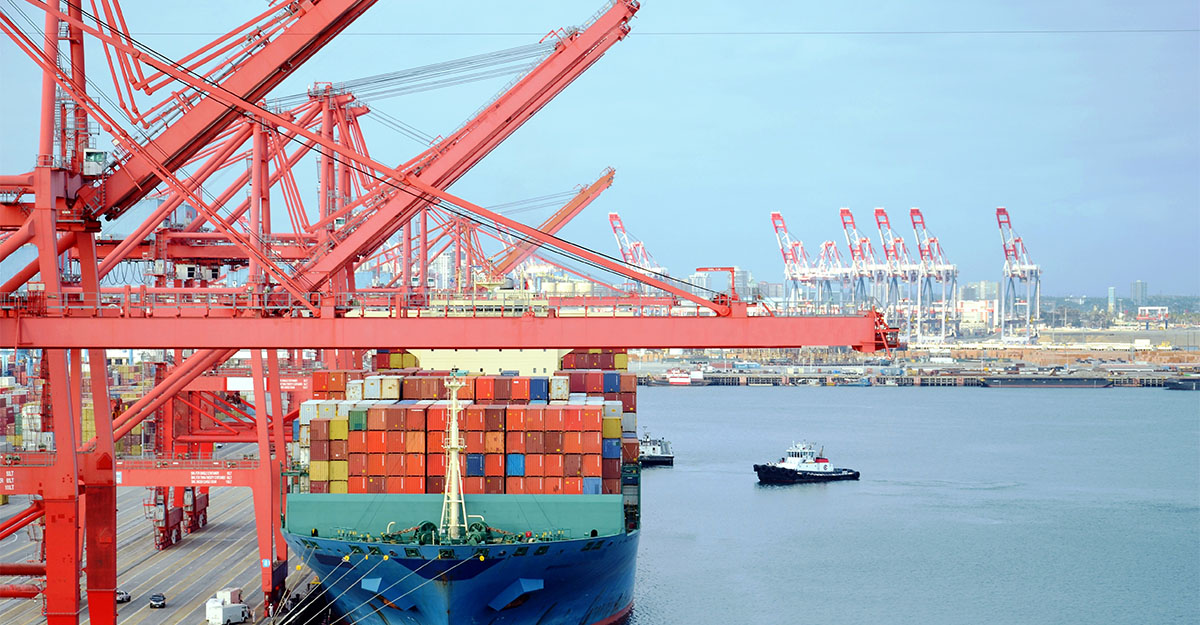
Tariff uncertainty is generally regarded as a procurement issue. Finance teams model new duty rates while purchasing departments renegotiate supplier contracts. For the most part, though, that conversation remains in spreadsheets. But at the ports of Los Angeles and Long Beach, tariff uncertainty has become much more tangible.
It is swinging cargo volumes from month to month and throwing terminal schedules into disarray. Tariff uncertainty has created stress for trucking and warehouse operators, which are forced to absorb unpredictable surges and slowdowns they can’t plan around. That impact is real on the docks and in every inland corridor in Southern California right now.
When new tariffs are announced, or even just threatened, shippers try to rush goods in. In July 2025, the Port of Los Angeles moved more than 1 million TEUs, an all-time record. But it was largely due to importers accelerating cargo ahead of tariff deadlines. The Port of Long Beach did the same and ended 2025 at 9.9 million TEUs, a new record fueled by what CEO Noel Hacegaba called “the front-loading of cargo by importers wanting to get ahead of new tariffs.”
Then there was a pullback. The front-loading wave eased, and Long Beach was down 6% in February 2026 from the same time last year. The NRF’s Global Port Tracker forecasts first-half 2026 volume at 12.21 million TEUs across major U.S. ports, a 2.5% decrease from the same period in 2025. That boom-and-bust cycle creates real problems, such as terminal congestion during surges, underutilized capacity during lulls, and staffing headaches for every drayage carrier and warehouse operator trying to plan around volumes that swing wildly from quarter to quarter.
Tariff uncertainty is also changing where and how vessels show up in the San Pedro Bay complex. Restructuring of ocean carrier alliances over the course of 2025 and 2026 has resulted in different vessel arrival patterns and different terminal allocations. There have also been different berthing windows for many trade lanes. The Gemini Cooperation and the Premier Alliance replaced the old 2M agreement between Maersk and MSC.
That means the terminal you’ve been picking up containers from for the last two years may no longer be the one that moves your cargo. And when your terminal assignment shifts, your drayage routing shifts with it. Pickup locations will be different, appointment windows will be different, and the carriers you have relied on may not even service the new terminal. Every time trade policy forces another reshuffle, shippers locked into a single-terminal workflow are exposed.
If volumes are going to spike ahead of a tariff deadline, shippers need trucking capacity that can scale without scrambling for trucks at already inflated spot rates. When volumes are down, they need partners that won’t run off to other lanes where the money is better.
Transloading near the port adds a buffer. Instead of booking every container to a fixed destination weeks in advance, shippers can deconsolidate at a near-port facility and reroute cargo based on current conditions rather than rely on a forecast made three months ago. That matters because tariff-driven shifts tend to alter when the freight arrives and where it needs to go next. A retailer that has moved forward six months of Chinese inventory may suddenly have to shift stock to different regional warehouses than originally expected.
Inland transportation flexibility ties into the same logic. Right now, the ability to reroute without starting over and multi-lane coverage are worth more to shippers than the cheapest per-mile rate on a single corridor.
Golden State Logistics’ integrated model views drayage and inland transportation as a single continuous move. When tariff uncertainty causes a volume spike, Golden State can spread the pickups over multiple terminals in the San Pedro Bay complex rather than just one or two. When volumes slow, that same cross-terminal reach helps keep operations aligned with the cargo’s actual location.
The coordination of port pickup and inland delivery also means that when terminal assignments change, and they have changed frequently over the past 18 months, the downstream plan adjusts without a gap. The move is one sequence from the dock to the destination. This type of operational agility is transitioning from a nice to have to a baseline requirement for anyone moving goods through the LA/Long Beach port complex. Contact us today to get started.

The efficiency of port drayage operations isn't just a matter of speed; every minute saved in drayage is a minute gained in market availability, customer satisfaction, and economic vitality.
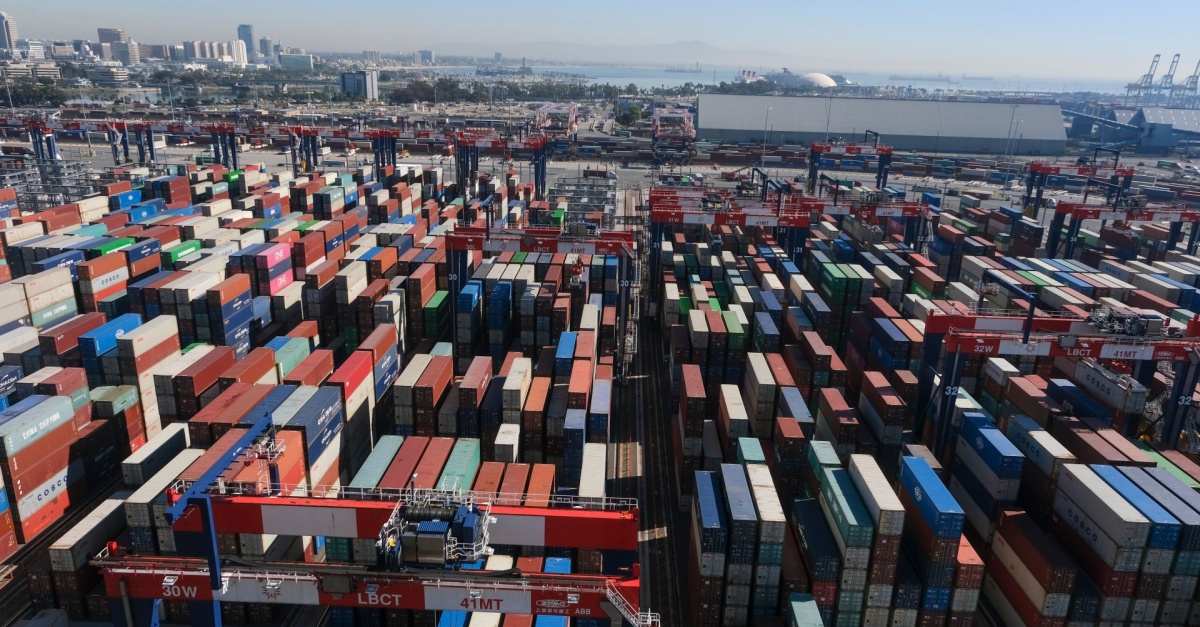
Transloading can be treated as an afterthought and a reactive step, resulting in a waste of time and resources, especially in high-container traffic zones like the ports of Los Angeles and Long Beach.
2999 East Pacific Commerce Drive Rancho Dominguez, California 90221
Oakland, CA


