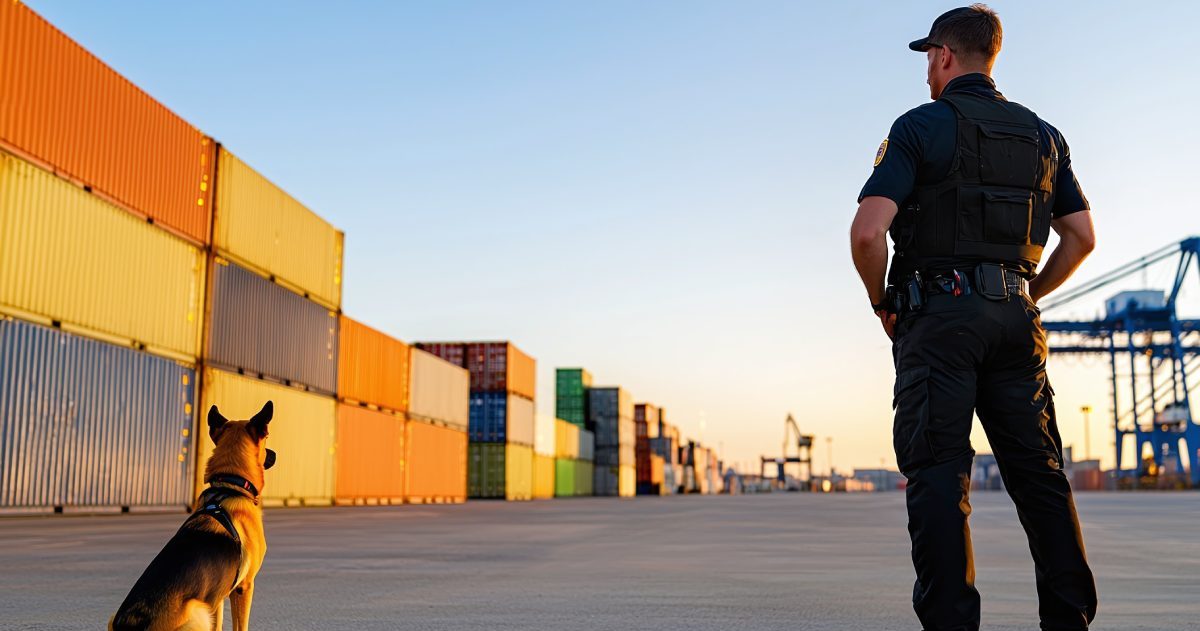
You do not have to be a customs broker to move freight through the ports of LA and Long Beach. But you do need to know what’s happening with your container between discharge and pickup because that is where time and money quietly disappear. A container may arrive at APM Terminals Pier 400 on a Tuesday morning, for instance, and still not shipped by Thursday.
In 90% of cases, the reason lies somewhere in the U.S. Customs process. But without a clear understanding of how it works, you may struggle to determine why there is a delay and, worse, fail to avoid it.
The Importer Security Filing (ISF), or the 10+2 as the trade calls it, is the first deadline in the U.S. Customs process, and it comes before the container ever hits the water. The importer (or its customs broker) must submit 10 data elements to CBP at least 24 hours before the cargo is loaded onto the vessel at the foreign port. But this timing is always throwing people off.
The 10 data elements include the buyer, seller, manufacturer name and address, country of origin, HTS tariff code, and the container stuffing location. If the importer makes a mistake, files late, or doesn’t file at all, CBP can fine it $5,000 per violation, although it generally caps liquidated damages at $10,000 per ISF. Since 2015, individual ports have been able to issue those penalties locally within 90 days, without first sending a warning letter.
A poorly filed ISF can place a hold on the container at the terminal, which means your box could be sitting at LBCT or Fenix Marine with a flag on it that nobody told you was coming. Although your customs broker files the ISF, your job is to make sure it gets the data on time to file it properly.
Once the vessel is en route or has arrived, the customs broker files the formal entry with CBP through the ACE system. The ISF does not have that because it is a predeparture security screening. But the customs entry is the formal application to bring goods into the country. It is part of the admission side of the U.S. Customs process.
The entry package includes the commercial invoice, the packing list, the bill of lading, and the importer’s customs bond. Most commercial importers use a continuous bond, which covers all entries and ISF filings for all ports in the U.S. If you are a smaller importer with only a few shipments a year, a single-entry bond will work, but it costs more per shipment.
CBP reviews the entry, checks it against the ISF, reviews HTS classification, and decides whether to release it or hold it for exam. To be released, duties, the Merchandise Processing Fee, and the Harbor Maintenance Fee must be paid or bonded for. This is the “call your customs broker” moment because if it fails to file the entry or pay the duties, your dispatcher cannot lift a customs hold, no matter how many calls they make to the terminal.
CBP can select any container for examination, and there is no real way to know when or why it will happen to one of yours. There are three types of exams you could encounter when going through the U.S. Customs process at the ports of Los Angeles and Long Beach.
The container goes through a large-format X-ray machine at the terminal. No one opens it or breaks the seal. CBP reviews the images and either clears the container or escalates the case. A VACIS exam lasts from one to three days and costs up to around $300.
In this exam, a CBP officer will break the seal on the container and visually inspect the load, sometimes cutting open a few cartons near the back to see what’s inside. This is done at the terminal and typically takes two to four days. It may cost $350 to $500, and demurrage continues to accrue while the container sits on the pier waiting for CBP to finish processing.
This is the one everybody wants to get out of. In this case, CBP orders that the container be moved to a Centralized Examination Station (CES), an off-terminal bonded facility. A devanning crew unpacks everything. CBP looks inside, compares it to your invoice, checks the country-of-origin markings, and opens boxes. It can take anywhere from five business days to three weeks, depending on the CES backlog. Costs can range from $1,000 to $5,000, including drayage to the CES and storage. While you do not pay for the exam in the U.S. Customs process, you do pay for everything that goes on around it.
Customs is not always the reason for a hold on the terminal portal. Many reasons can stop a container other than the customs process, and each type of hold has a different owner. A CBP hold means the shipment is being held by U.S. Customs for document review or a physical exam. Your customs broker is supposed to handle this.
A PGA hold (Partner Government Agency) means the FDA, USDA, CPSC, or other agency has questions of its own about the shipment. FDA holds are common for food imports. USDA may place a hold on an entry if it involves wood packaging or agricultural products. These agencies handle releases independently of CBP, so your container must receive clearance from both CBP and any PGA that flagged it before it can move.
If there is a freight hold, then that means the ocean carrier has not been paid. That is between the importer and the carrier. The terminal itself imposes a terminal hold, usually for unpaid demurrage or PierPASS TMF charges. While some are cleared in hours, others can take days, and the terminal does not guarantee you a release time.
A dispatcher determines the hold type early, assigns the appropriate individual (broker for CBP and PGA holds, carrier for freight holds, importer for payment issues), and schedules the drayage appointment so the container moves as soon as it is available.
CBP releases the entry into the ACE system, which handles one piece of the U.S. Customs process. Now, that doesn’t mean your container is free to move. Any existing PGA holds must be released separately by those agencies. Only when all holds are released does the terminal update the container status from “held” to “available.” And even then, “available” does not mean the container is “on the truck.” It just means that you can now schedule a pickup appointment. You still need a confirmed terminal appointment time, chassis, cleared PierPass TMF payment, and a truck driven by a driver with a TWIC card.
The distance between “customs cleared” and “container on a chassis rolling out the gate” surprises many people the first time they see it, especially since it can take hours and, depending on appointment availability and gate schedules, can be a full day. This is the handoff point in the U.S. Customs process where the paperwork side ends and the freight side begins. It is also where the drayage provider comes in.
After clearing U.S. Customs and the terminal marks your container as available, the physical move starts. Drayage providers like Golden State Logistics book the terminal appointment, assign a chassis, dispatch a truck, and get the container through the gate. After that, the container is transported to a warehouse, a transload facility, or a distribution center.
Not every container reaches its intended destination. Sometimes the consignee’s warehouse will have no receiving appointment until the next day. Sometimes the container clears customs at 4 p.m. on a Friday and nowhere is open to deliver it. Sometimes the buyer also needs time to find floor labor.
In those cases, the container requires staging — a secure yard where the freight can sit until the final delivery window opens up. That yard must be CTPAT (Customs-Trade Partnership Against Terrorism) compliant for freight that has just cleared U.S. Customs so the chain of custody isn’t broken between the port and the destination. Staging in a noncompliant yard after your container has spent days clearing customs is a risk most shippers don’t consider until something goes missing.
Golden State Logistics does not file entries, handle ISF submissions, or deal with any paperwork in the U.S. Customs process because we’re not a customs broker. But we handle everything that happens after release. With 30 years of drayage experience at the ports of LA and Long Beach, the dispatch team understands how each terminal’s appointment system functions, which gates move faster at certain times of day, and what the chassis situation is like on a given morning.
Contact us today to get started.
When transloading is timed to match the inland dispatch, the cargo essentially moves from the vessel to the final destination without stopping long enough to incur costs.
Smart transloading offers a way out: shifting cargo quickly and strategically between transport modes to cut inland miles, avoid detention charges, and move freight to market faster.
2999 East Pacific Commerce Drive Rancho Dominguez, California 90221
Oakland, CA


