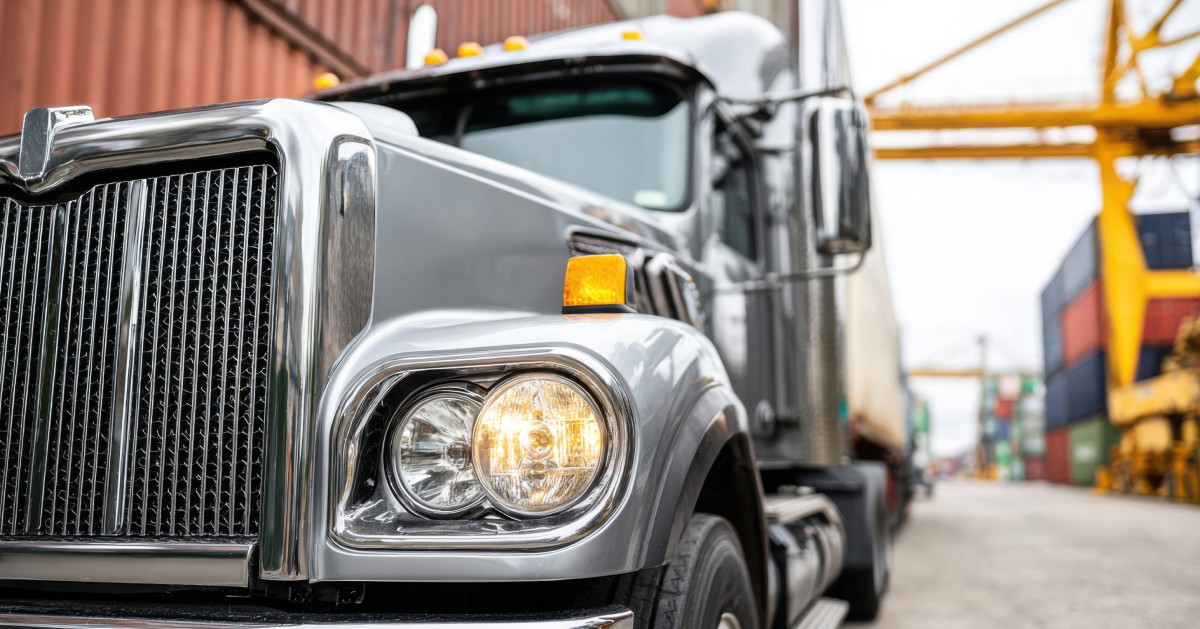
Your container is off the ship, and the appointment is set, but no one can find a chassis to put it on because every frame in the yard is either spoken for or under somebody else’s box in a Compton warehouse.
The container chassis shortage at the ports of Los Angeles and Long Beach follows a pattern inherent in how the equipment is owned, shared, and returned. Knowing the pattern won’t fix it, but it will show you which carriers are set up for it and which ones are scrambling the same day you are.
Until about 2009, most chassis in the United States were owned by ocean carriers and given to truckers free of charge. But between 2009 and 2015, the major shipping lines divested their chassis fleets to three intermodal equipment providers (IEPs): TRAC Intermodal, DCLI, and FlexiVan.
That changed everything. DCLI reported about 115,000 chassis in the LA and Long Beach complex alone, and after the ownership change, a trucker no longer got a free chassis with the container. Each IEP had its own pool, so under that fragmented ownership model truckers had limited chassis availability at pickup and fewer options unless they had an interchange agreement with the correct provider. At one point, you could walk past 30 open frames because they were from the wrong provider.
To solve that, the three IEPs formed the Pool of Pools in 2015, letting truckers pull any chassis from any provider, regardless of ocean carrier. For almost a decade, the Pool of Pools dealt with about half of all chassis moves in the port complex. But then the agreement came apart. FlexiVan exited the agreement in 2025, and by June 30, 2026, TRAC had followed suit. Now shippers are back to separate pools, with fewer shared options at the gate and the risk of container chassis shortages that come with fragmented access.
Today a trucker picking up a container has to know what IEP has the chassis agreement for that ocean carrier’s box, where that IEP stages its equipment and if any are open at the terminal. If the answer to that last question is no, the trucker deadheads to another yard or waits.
The container chassis shortage keeps returning because several factors across the supply chain feed off each other, especially when high consumer demand drives imports higher.
Let’s take street dwell, for example. A chassis-mounted loaded container leaves the port and goes to a distribution center, warehouse, or rail yard. It sits there until the container is unloaded and the empty chassis is driven back. A normal round trip takes about four and a half days. In times of import surges, dwell times can exceed one week at warehouses, where the chassis is effectively used as temporary storage. What should have been a quick equipment cycle has become a shortage of chassis that constrains cargo movement and delays shipments at the port.
At the height of the 2021 port congestion, street dwell times were up to 8.5 days. And every day a chassis sits under a container at a warehouse is a day it’s not at the port for another trucker.
When mega-vessels unload thousands of containers all at once, every trucker needs a chassis at the same terminal, at the same time. Modern mega-vessel operations can create sudden spikes in demand that put additional strain on chassis availability. But a vessel that arrives on time unloads the same amount as a vessel that arrives late, and the terminal has to deal with both.
Containers also end up in the wrong place. Chassis are often not returned to their originating marine terminals. Every day, thousands of chassis move around the port complex, so units end up in various locations and inventories become unevenly distributed. No central system balances them in real time.
All of this feeds the container chassis shortage. Street dwell climbs, chassis flow slows, and chassis delays extend container dwell times for cargo at the port. It is a feedback loop that appears whenever freight volume exceeds the equipment’s cycle capacity.
On the supply side, there aren’t many places to buy new chassis.
In 2020, the Coalition of American Chassis Manufacturers accused the largest Chinese chassis maker CIMC of dumping equipment in the U.S. market, and the Commerce Department agreed. As of mid-2021, Chinese chassis imports faced antidumping duties of 188% and countervailing duties of about 44%. Add the 25% Section 301 tariff, and a $10,000 chassis from China now had over $25,000 in duties. Those U.S. tariffs exacerbated the shortage and effectively cut off roughly 250,000-300,000 imported chassis units from China.
Domestic manufacturers took what they could get, despite constraints in raw materials and skilled labor. Stoughton Trailers opened a plant in Waco, Texas, in 2022. Cheetah Chassis, Pratt Industries, and CIE Manufacturing also manufacture chassis, but they make far smaller volumes than CIMC used to ship, leaving limited new equipment available. Stoughton’s chassis was sold out during the surge in 2021, with lead times of four to five months.
Then there’s another bottleneck: chassis subcomponents such as axles, brake assemblies, tires, wiring, and other critical components, including electronic control units and semiconductors. Manufacturers also face delays acquiring those parts from suppliers with their own backlogs, and the absence of critical components can cause production delays that leave a finished frame on the line for weeks.
That’s the supply side trap behind the container chassis shortage: structural inefficiencies and manufacturing bottlenecks. Demand can rise in weeks, but new chassis take months to build and years to plan for at scale.
The federal ELD mandate took effect in December 2017, and it changed the math for every trucker working the ports of Los Angeles and Long Beach. The rule requires all hours to be logged electronically, caps driving at 11 hours in a 14-hour on-duty window, and leaves no room for falsification. So whenever the time runs out, wherever the trucker is, it is done for that day.
But the clock is ticking the entire time a trucker waits in line at the terminal. The Harbor Trucking Association has been tracking turn times in LA and Long Beach, which average 80 to 90 minutes. Some terminals perform better. Matson’s Long Beach terminal has averaged in the mid-30s. Some have hit 120 minutes and more. Chassis-related wait times for truckers have tripled since the pandemic. A trucker who spends two hours on one pickup has two hours less time for the delivery, the return, and anything else after that.
Fewer turns per day means less chassis cycling back. The container chassis shortage was not caused by the ELD mandate, but transportation disruptions and limited available drivers reduce the window each trucker has to work around it by slowing chassis cycling. Owning your own chassis doesn’t fix terminal wait times. There is a time to the gate, and the trucker still has to clear the gate. But what private chassis do change is the other half of the picture.
Shippers pay when there is a container chassis shortage.
Demurrage starts when a container sits at the terminal after the ocean carrier’s free time expires. Daily fees at Los Angeles and Long Beach range from $100 to $350 per container, depending on the carrier and tariff tier. If there is no chassis to move the container, chassis delays at the port increase demurrage fees for shippers, and the charges keep piling up.
At the other end of the scale, detention is when a container sits on a chassis for too long because a warehouse can’t unload it quickly enough. The same shortage can also create significant detention penalties when a chassis stays tied up too long.
The Federal Maritime Commission’s 2024 billing rule calls for invoices to be sent within 30 calendar days of the last charge, but those charges can be thousands of dollars on a single shipment.
Missed appointments make it worse. Across the industry, port delays average about 10 days at the Port of Los Angeles and nearly two weeks at Savannah. Many shippers in Los Angeles and Long Beach run tight receiving windows, and a shortage of container chassis that delays a delivery by a day can force a rebooking, a rescheduled crew, and extra terminal fees for a second try. In peak season, with dozens or hundreds of containers in play, one bad week of container chassis shortage can cost more in demurrage than the freight itself.
Golden State Logistics’ private fleet consists of more than 500 chassis. If the carrier owns its own chassis, the trucker doesn’t go to the IEP yard and get in line to pull a frame from the common pool. The chassis is staged, matched to the truck, and in the system. During the peak season when the pool is low and wait times at chassis depots are two or three hours long, controlling private chassis equipment improves availability when pool supply tightens.
Through Golden State Express, GSL pairs those 500-plus chassis with 150 company trucks, so the chassis and the tractor are one unit, with dispatch visibility into where each frame is and when it returns, supporting faster return chassis cycles. There’s no guessing which pool to pull from. No interchange agreement to worry about.
GSL’s monthly meetings with the marine terminals feed into this also. Equipment looseness usually shows up a few weeks before it reaches the public pool. Carriers that attend those meetings hear about it early. Most carriers do not attend, but GSL does.
That doesn’t make GSL immune to the broader container chassis shortage. Terminal lines still take time. Mega-vessel surges still fill the harbor. But the part that comes from pool access, equipment cycling, and being sixth in line for a frame that isn’t there — that part disappears when the carrier already has the chassis.
A shipper does not need 115,000 chassis. Shippers need enough chassis for their containers at their terminal on the day the vessel arrives. A carrier that has them and a carrier looking for them are a day apart because during peak season, a day is demurrage, and that kind of control makes the supply chain more robust during recurring shortages. Contact us today to get started.
Three factors hit at the same time, and they reinforce each other in a way that makes each one worse on its own. Chassis sit too long at warehouses during import surges, sometimes over a week. Mega-vessels flood the terminals with containers that all need pickup at once, creating sudden spikes in load demand and reducing availability at the gate. And the Pool of Pools, which used to let truckers grab any available chassis regardless of provider, broke apart in 2025 and 2026, leaving fragmented ownership and fewer options for truckers. Put those together, and there aren’t enough frames at the gate when volume spikes.
Antidumping and countervailing duties above 230% on Chinese-made chassis, worsened by the implementation of U.S. tariffs that reduced imports of new equipment, cut off the largest source of imports. Domestic producers like Stoughton, Cheetah, and CIE Manufacturing have limited output, and even they face delays acquiring chassis subcomponents needed to complete production, with long lead times on parts like axles and brake assemblies. Demand can jump in weeks. Building new chassis takes months.
When a container chassis shortage keeps a box sitting at the terminal, demurrage charges start after the ocean carrier’s free time runs out. At Los Angeles and Long Beach, those charges range from $100 to $350 per container per day. A single bad week during peak can cost a shipper more in demurrage than the freight was worth.
In this article, we explain why freight visibility is so critical and what changes when you have complete visibility into what happens after the port gates close behind your containers.
How cloud systems improve collaboration, centralize documentation, speed up decision-making, and support complex supply chain moves across drayage, warehouse, and inland networks.
2999 East Pacific Commerce Drive Rancho Dominguez, California 90221
Oakland, CA


