The moment a shipper becomes truly concerned about port congestion is when its freight is caught in it. By the time the shipper reacts, the backup at the port is already felt on the invoice.
In recent years, the port complex of Los Angeles and Long Beach has become notorious for port congestion. Shippers that dodge the worst of it in Southern California tend to have a dray carrier in the shipping process that hears about it before the port backup hits the news.
Those carriers get that information straight from the people running the terminals. At Golden State Logistics (GSL), we stay informed by attending monthly port terminal meetings with every terminal at the ports of LA and Long Beach. Now we’re sharing what we learn in those meetings, how terminal intel compares to what the headlines report, and why a shipper sitting far away in Dallas or Memphis benefits from a carrier that hears things at the source.
Port terminal meetings are not open to the public. They are working sessions between terminal operators and the drayage carriers that move freight through their gates every day. GSL attends one with each terminal in the San Pedro Bay complex every month, year-round. But not every carrier does. In fact, most of them skip port terminal meetings entirely.
The standard agenda runs through gate hours, chassis availability, vessel schedules, berth assignments, and changes to the appointment system. But the part that matters most never makes it into a press release. Terminals talk about what they are seeing in their own yards, such as container dwell times starting to creep up or a vessel bunching pattern forming two or three weeks out.
That kind of ground-level detail doesn’t make the news until it turns into a real problem. But for those in the room, it is a heads-up. For the carrier paying attention, it is a two-week head start on adjusting pickup plans. Carriers that treat port terminal meetings as optional tend to find out about these problems the hard way.
San Pedro Bay handles roughly a third of all containerized imports entering the country. The Port of Los Angeles moved more than 2.9 million TEUs during June, July, and August, making it the strongest three-month stretch in the port’s history. When volume runs that high, conditions at individual terminals can change in days, but not all at once.
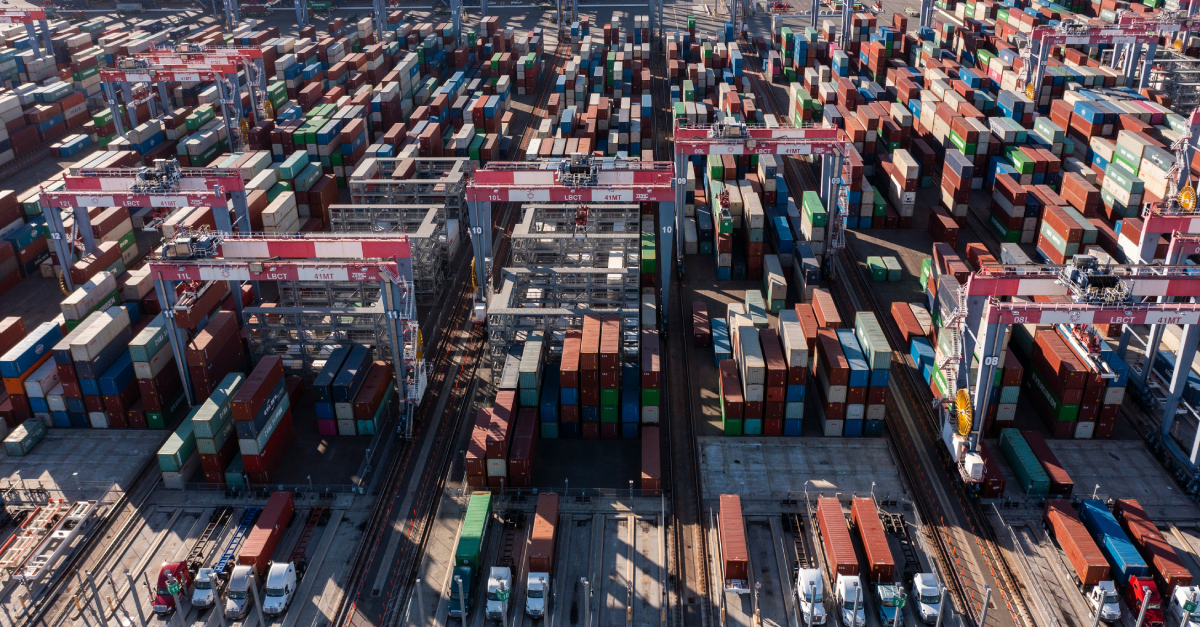
That is the problem with port congestion reports that come from media updates. Most reporting treats the port complex as one entity. For instance, it could be “congestion worsening at LA.” But your container is not really sitting at “the port.” It could be sitting at Pier 400, LBCT, or Everport. Congestion at one terminal can be completely different from the terminal next to it.
Turn times tell a more complete story. Back in February 2018, for example, Matson’s Long Beach terminal averaged 37-minute truck turn times, compared with 73 minutes across Long Beach and 88 minutes across Los Angeles.
A carrier that sits in monthly port terminal meetings hears which terminals are slowing down before the Harbor Trucking Association (HTA) publishes monthly averages. Shippers that rely on a month-old report for port congestion updates are working with outdated information, which hurts efficiency and also makes them less likely to secure terminal slots where automated appointment systems reward faster action.
Say a terminal mentions during a monthly meeting that a vessel alliance has moved two sailings to the same arrival date. On its own, that is a scheduling note. But experienced dispatchers like GSL’s know that means double the container volume hitting one terminal in a single shift, which tightens the appointment calendar and slows chassis cycling so they can adjust each shipment plan before the surge hits the terminal. Any trucker without a plan for that will have to wait.
So GSL moves first. Chassis get staged early, and appointment windows get locked before the calendar fills to protect efficiency. If the terminal flags that a gate will shut for maintenance during that window, the pickup schedule shifts again. A carrier that skips port terminal meetings only finds out about the surge when their trucker shows up and the line wraps past the chassis yard. At that point, a shipment can already be delayed.
Now picture the shipper on the other side. Its carrier heard about the surge two weeks out because someone from that company was sitting in the port terminal meeting when the schedule change came up. Containers move on the first appointments when chassis are readily available. The congestion is real, but it is someone else’s problem.
Port congestion updates are not hard to find online. The Port of Los Angeles publishes volume numbers every month, the Marine Exchange of Southern California tracks vessel arrivals and anchorage times, and the HTA reports average turn times across every terminal in the complex. That public data helps carriers monitor conditions at the Port of LA and across global ports, but it is all backward looking by the time you read it.
You can’t get a phone call from a report, and you cannot get a phone call without the relationship that earns it. GSL’s 30 years at San Pedro Bay means the company’s dispatchers know exactly who to call at every terminal, the operations contact who can say whether Gate 4 is moving or whether the yard is stacking because a crane went down an hour ago. That kind of access comes from decades of sitting across the table in port terminal meetings and following through on what gets discussed.
“The industry is very much who you know,” says Cecelia Kerwin, Golden State’s vice president of operations. Terminal relationships build over years of showing up to port terminal meetings, handling problems without burning bridges, and being a carrier the terminal wants to work with.
Still, no relationship can move containers when a terminal is truly overwhelmed. In early December 2021, for example, 96 container ships were queued for the ports of LA and Long Beach, and the average vessel dwell time off the coast rose to 10 days during the backup.
No phone call could fix that, but carriers that had been sitting in port terminal meetings for years saw the buildup forming weeks before the worst hit, so they could adjust their pickup plans. Carriers without that access sat in the same lines as everyone else.
Beyond just slowing freight down, port congestion can be costly. When containers sit at the terminal past the ocean carrier’s free time, demurrage kicks in. At Los Angeles and Long Beach, daily charges run $100 to $350 per container depending on the carrier and the tariff tier. Detention stacks on the chassis side. Missed appointments mean rebooking and rescheduled warehouse crews.
The Federal Maritime Commission’s 2024 billing rule says demurrage and detention invoices must go out within 30 calendar days of the last charge. That just means the bill comes faster, but it does not make the bill smaller.
During peak season, when a shipper has dozens or hundreds of containers moving, a few bad days of port delays can cost more than the freight itself. Shippers that get port congestion updates from a carrier that attends port terminal meetings have a better shot at keeping those charges down because their carrier starts moving before the backup builds.
Golden State Logistics has operated at San Pedro Bay for 30 years. The company attends monthly port terminal meetings with every terminal, holds an active membership in the HTA, and keeps working relationships with the Federal Maritime Commission and port officials at both Los Angeles and Long Beach.
Those matter because they are why GSL’s dispatchers can tell a shipper before sunrise whether their container will move today, track its progress, or the terminal is backed up before the trucker even leaves the yard. Intel from port terminal meetings feeds directly into dispatch decisions every week, year-round.
GSL backs that terminal access with 500-plus private chassis and 150 company trucks through Golden State Express. When terminals flag a surge coming, GSL can stage equipment, lock appointment windows, and shift routes before congestion shows up in anyone’s port updates, helping shippers monitor freight moving through the Los Angeles port and Long Beach ports instead of only reacting after delays hit. Taking into account those signals, GSL can also adjust plans before cargo stalls.
This is the first in a monthly series. Each month, GSL will share what the terminals are telling us, what it means for shippers moving freight through Los Angeles and Long Beach, and what to watch for in the weeks ahead, with updates available for export from each report. Contact us today to request help, create an account for updates, or get started.
At the 2021 peak, 96 container ships waited offshore for a berth, with average dwell off the coast rising to about 10 days.
The ports of Los Angeles and Long Beach together form the busiest container port complex in the country, handling about a third of all U.S. container imports.
Not typically. Terminal operators and drayage carriers attend the meetings, though chassis availability is a standing agenda item, and they may also cover rail flow, empty containers, and whether terminals have room for new containers, since those factors help decide how quickly pickups can happen.

Technology is not a new concept or phenomenon, and neither is the transloading operation. This means the transloading operations have witnessed their fair share of technology solutions.

As businesses saw during the pandemic the inefficiencies of the long-established way of handling port drayage, they began to realize that they needed to ratchet up their investments in technology.
2999 East Pacific Commerce Drive Rancho Dominguez, California 90221
Oakland, CA


